
Stoicism and the pursuit of a good life
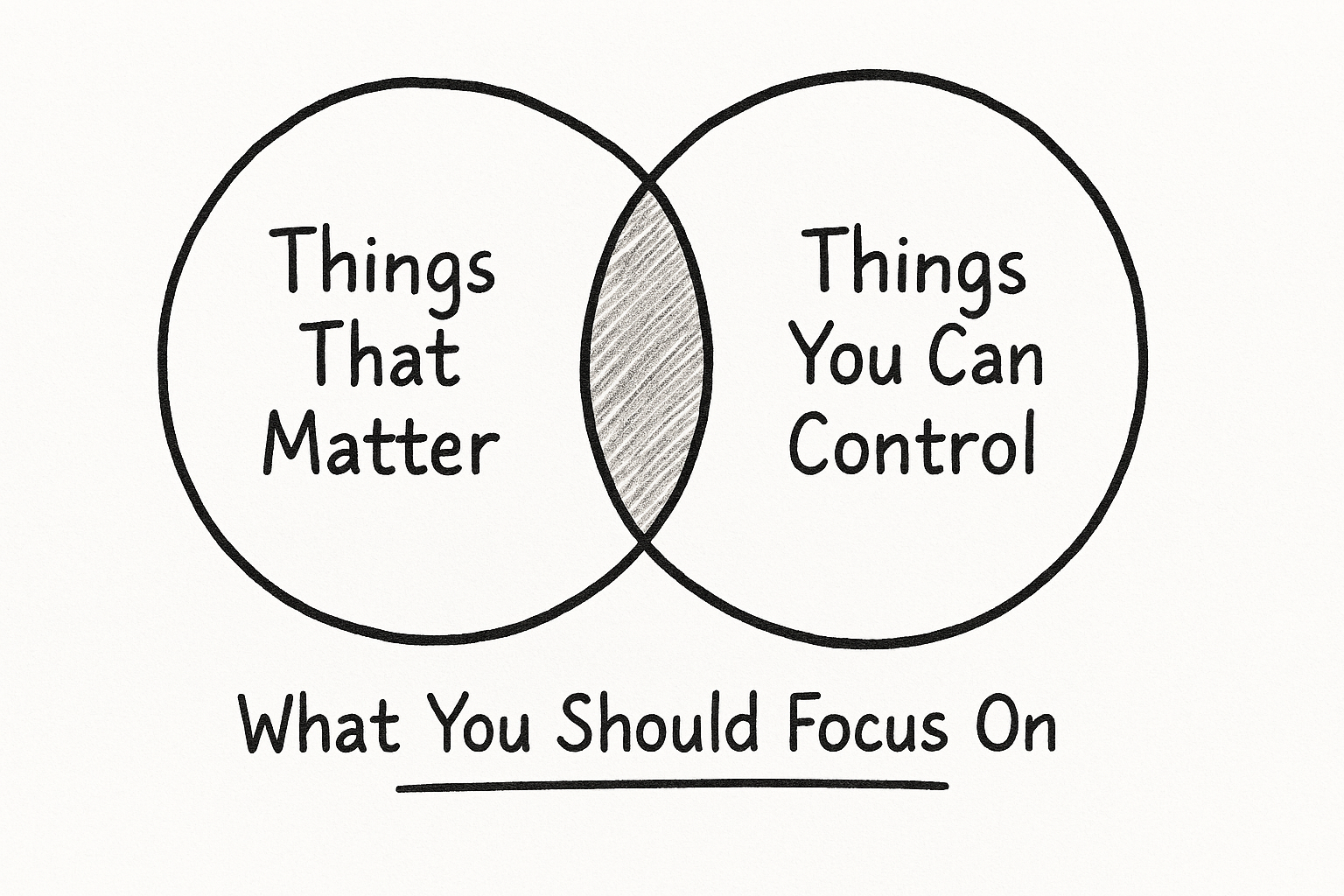
tl;dr Stoicism emphasizes focusing on the controllable aspects of our lives and accepting the uncontrollable. Applying this philosophy can help us in our pursuit of a good life.
Given my first name, it’s probably not surprising that I am familiar with the Serenity Prayer:
Grant me the strength to accept the things I cannot change, the courage to change the things I can, and the wisdom to know the difference.
Saint Francis of Assisi.
I’ve always appreciated the sentiment of this prayer, but I struggled to find practical ways to apply it during stressful times. Nevertheless, I have found different sources of wisdom that echo this message and do provide the guidance I desire.
The first was at the start of my graduate studies in astrophysics, when I became a practitioner of David Allen’s Getting Things Done (GTD) methodology, which emphasizes clarity of mind and effective action through focusing on what is actionable.
More recently, I came across Ryan Holiday’s accessible writings on applying the timeless principles of Stoicism to modern life. What drew me to Stoicism was its emphasis on focusing on what we can control and accepting what we cannot, echoing the wisdom found in the Serenity prayer.
The only guarantee, ever, is that things will go wrong. The only thing we can use to mitigate this is anticipation. Because the only variable we control completely is ourselves.
Ryan Holiday, The Obstacle Is The Way.
I decided to explore the application of this philosophy to various aspects of my life, and to share my experiences in this blog over the next few months. My plan is to discuss its use in such domains as:
- My personal life: amidst the chaos of parenting young children, it has helped me identify what is truly important and accept the imperfections of a hectic household.
- Working as an individual contributor: during some recent career turbulence, it has provided me with a framework for continuous growth.
- Managing others at work: it has guided me through some difficult conversations while avoiding emotional escalation.
- Navigating the politically divisive climate of today: the history of the Stoics includes many examples of leaders with principled behavior in the face of adversity and who strove to change their societies for the better.
My hope is that as I am writing about and internalizing the learnings from Stoicism that others may be inspired by these posts and find ways to stay calm amidst the storm of life.
In my next post in this series , I’ll share how Stoicism has guided me as an individual contributor and Data Scientist to continuously improve despite major setbacks.

Leave a comment